

Why Harley Street Sets the Standard for Hair Restoration
For generations, Harley Street has been synonymous with elite medical care in London, and its reputation extends powerfully into the world of hair transplant procedures. Patients travel from across Europe, the Middle East, and North America to access clinics clustered around this historic medical hub, seeking refined techniques, meticulous artistry, and rigorous standards. The area’s concentration of experienced surgeons, purpose-built theatres, and advanced technology creates a critical mass of expertise that fuels constant innovation in hair restoration.
What makes hair transplant Harley Street offerings stand out is the combination of technical mastery and aesthetic judgment. Surgeons here typically blend scientific precision—donor management, graft survival optimization, and angle alignment—with a nuanced eye for hairline design suited to facial features and age. Subtlety is paramount: an excellent hair transplant is invisible to the casual observer, mimicking natural density transitions and whorl patterns. Clinics that excel in this environment plan beyond the immediate result, safeguarding the donor area and projecting future hair loss patterns to preserve long-term balance.
Technique matters, and Harley Street teams are fluent in modern approaches like FUE (Follicular Unit Excision) and FUT (Follicular Unit Transplantation). FUE prioritizes minimal scarring and rapid recovery by extracting individual follicular units, while FUT remains valuable for higher graft yields in a single session, especially for extensive thinning. Top-tier units employ state-of-the-art microscopes, keep grafts hydrated and temperature-controlled, and deploy implantation strategies that respect the curl, direction, and caliber of each hair. These micro-level decisions collectively determine whether the final outcome looks seamless.
Beyond science, discretion and patient experience define the neighborhood. From unmarked entrances to dedicated recovery spaces, the environment supports privacy and comfort. Aftercare protocols are thorough, guiding patients through the crucial first two weeks—when swelling, redness, and early shedding are managed—to the staged regrowth timeline that unfolds over 12 months. For patients comparing options across the hair transplant UK landscape, the consistency and pedigree of Harley Street often prove decisive.
Choosing the Best Hair Transplant in London: Techniques, Technology, and Team
Securing the best hair transplant london result begins with a comprehensive assessment. A skilled clinic evaluates donor density, hair caliber, scalp laxity (for FUT candidates), and the Norwood classification to forecast realistic coverage. The goal is not to chase raw graft numbers, but to prioritize natural distribution—framing the face, reinforcing the mid-scalp, and addressing crown needs without exhausting donor reserves. This planning mindset protects patients from overharvesting and supports future touch-ups if hair loss progresses.
Technique selection should match your goals and lifestyle. FUE suits those who prefer to keep hair short, given its dot-like scars, while FUT can be efficient for large sessions and for patients with long hair who can conceal a fine linear scar. Advanced clinics employ refined punch systems for FUE—choosing diameters and punch designs based on hair curvature and skin characteristics—to minimize transection and protect graft viability. Implantation may use implanter pens or forceps, but the key is controlled placement at the correct depth, angle, and direction. Adjuncts like PRP (platelet-rich plasma) are sometimes used to support healing, though they should be positioned as supportive rather than a substitute for solid surgical fundamentals.
Experience across hair types is crucial. Afro-textured hair, Asian hair with thicker shafts, and finer Northern European hair each behave differently under extraction and implantation. The best teams can adapt instrumentation and technique to respect curl patterns and reduce transection risks. They are transparent about expected coverage, maturity of the hairline, and the timeline: initial shedding around weeks 2–4, early sprouts at 3–4 months, bulk at 6–9 months, and maturation by 12–15 months.
Equally important are red flags to avoid: offers emphasizing extreme graft counts in single sessions without a donor strategy, opaque surgeon involvement (who designs, extracts, and implants?), and pushy sales tactics. Seek clinics that show consistent, high-resolution photo documentation, not just highlights. Patient reviews should reference the surgeon’s presence and the care of the technical team on the day. For those comparing providers, explore trusted destinations like hair transplant london to benchmark standards and understand how leading practices structure consultations, surgery flow, and aftercare.
Real-World Outcomes: Case Studies, Costs, and Aftercare in the UK
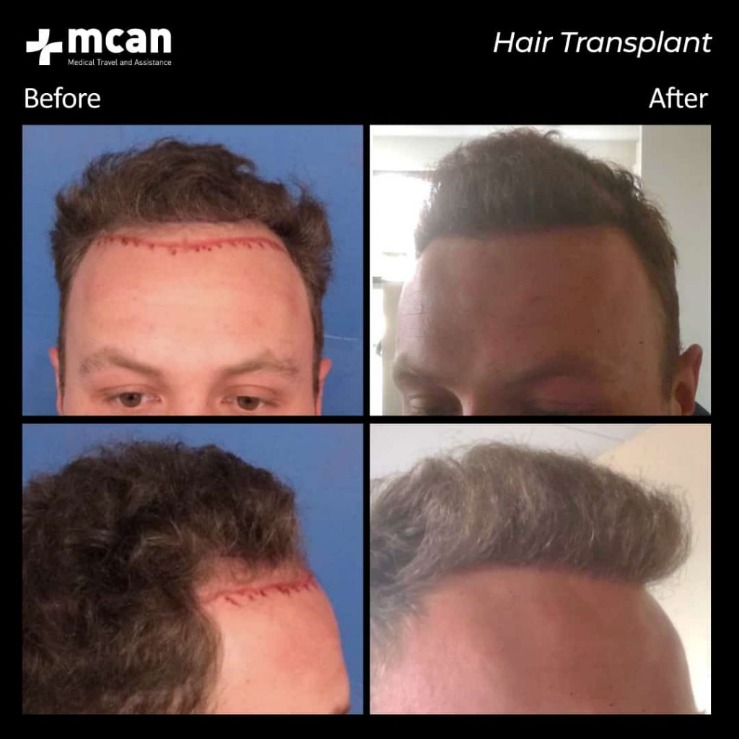
Case studies help translate technical talk into tangible expectations. Consider a 28-year-old male with Norwood 3 recession seeking conservative framing. A carefully planned FUE session of approximately 2,000–2,300 grafts can rebuild the hairline with a soft, staggered transition zone while preserving donor capacity for the future. The surgeon avoids a juvenile hairline, instead designing a mature contour that remains flattering as the patient ages. By month six, density begins to become noticeable; by month twelve, the result typically blends seamlessly with native hair.
Now take a 45-year-old with mixed frontal and crown thinning. Here, FUT might deliver 3,000+ grafts in one sitting, efficiently addressing the frontal third and mid-scalp, while the crown is managed strategically to avoid a “see-through” effect. Some patients complement a modest crown placement with scalp micropigmentation for optical density, a combination that can stretch donor resources while maintaining a natural look. This approach highlights the value of planning: not every square centimeter requires maximal density to achieve a satisfying, balanced appearance.
Ethnic hair characteristics also shape outcomes. For Afro-textured hair, curvature below the skin increases transection risk. Clinics experienced with this profile adjust punch design and angle, reduce extraction speed, and calibrate implantation channels to support curl orientation. Similarly, straight, coarse Asian hair requires careful angle control to prevent an “upright” look; fine European hair may demand strategic concentration around the hairline for the illusion of density. These nuances matter as much as the graft count itself.
Costs in the hair transplant UK market vary by technique and surgeon involvement. London pricing often reflects direct surgeon time during critical steps and investment in senior technicians and high-end microscopes. While “per-graft” quotes are common, patients should weigh the full package: pre-op planning, surgeon design and extraction/oversight, anesthesia protocols, graft handling, and comprehensive aftercare. Tempting low-cost offers can carry hidden trade-offs—limited surgeon presence, rushed extraction, or inadequate follow-up—that undermine long-term satisfaction.
Recovery and aftercare are predictable when properly guided. Expect two or three days of social downtime for swelling, with many returning to light activities within a week. Meticulous graft care—saline sprays, gentle cleansing, and avoiding friction—protects the recipient area during the early healing window. Shedding in the first month is normal; new growth emerges slowly, often unevenly at first. Good clinics arm patients with detailed instructions, schedule multiple check-ins, and address normal anxieties around shedding and “ugly duckling” phases. Medical management of ongoing hair loss—discussed individually—can help stabilize native hair, protecting the transplant’s framing effect.
Ultimately, success hinges on aligning expectations, donor potential, and surgical craft. Whether you opt for a flagship Harley Street address or another center of excellence in London, focus on proven technique, transparent surgeon involvement, and aftercare that supports every regrowth milestone. In a city renowned for aesthetic medicine, the combination of planning, precision, and artistry is what turns a well-executed hair transplant into a natural-looking, confidence-boosting transformation that holds up over time.


 Lotte Jansen