Music is entering a new renaissance powered by generative intelligence. With advances in deep learning, anyone can sketch a mood, describe instrumentation, and within seconds hear studio-grade results. From quick podcast beds to cinematic trailers and interactive game soundtracks, AI Music isn’t a novelty—it’s a practical, creative accelerator. What distinguishes today’s systems is not just realism, but control: tempo-aware arrangements, genre fidelity, adaptive looping, and mix-ready stems suited for modern workflows. As creators seek speed without sacrificing quality, the convergence of AI Music Creation, ethical training, and clear licensing provides the foundation for scalable, brand-safe sound.
From Idea to Audio: How AI Music Creation Works
Modern AI Music Generator platforms transform text, references, or MIDI hints into fully produced tracks by learning the statistical structure of audio. Most pipelines begin by converting waveforms to time–frequency representations such as mel-spectrograms; models then predict spectrogram frames conditioned on prompts like “uplifting indie pop, 110 BPM, palm-muted guitars, tight snare, bright vocal chop.” A neural vocoder—trained to reconstruct high-fidelity audio—converts the predicted spectrograms back into waveforms. This two-step approach captures both macro musical form and micro timbral detail, enabling reliable realism across genres.
Conditioning is the creative steering wheel. Whether using reference tracks, chord progressions, or descriptive tags, Music Generator AI systems learn to map inputs to stylistically consistent outputs. Advanced models support structure tokens—intro, verse, chorus, bridge—so songs follow industry patterns instead of drifting aimlessly. Others parse tempo and key to avoid harmonic clashes and offer targeted regenerations: rewrite only the bassline, swap the drum kit, or reharmonize the bridge while preserving the vocal. This granular control shortens iteration cycles and aligns deliverables with client briefs.
For melody-focused tasks, an AI Song Generator can propose hooks based on syllable counts, rhyme schemes, and contour shapes, then render them as synth leads or vocal-like textures. Hybrid workflows let producers import stems to guide the model—locking groove and harmony—while generating fresh instrumentation around them. The result is speed plus authorship: creators remain the decision-makers, using machine intelligence as an extension of their arranging, sound design, and mix sensibilities. As latency falls and quality rises, the promise of on-demand, context-aware music becomes a daily production habit rather than a speculative future.
Production-Ready Workflows: AI Background Music and Royalty‑Free Licensing
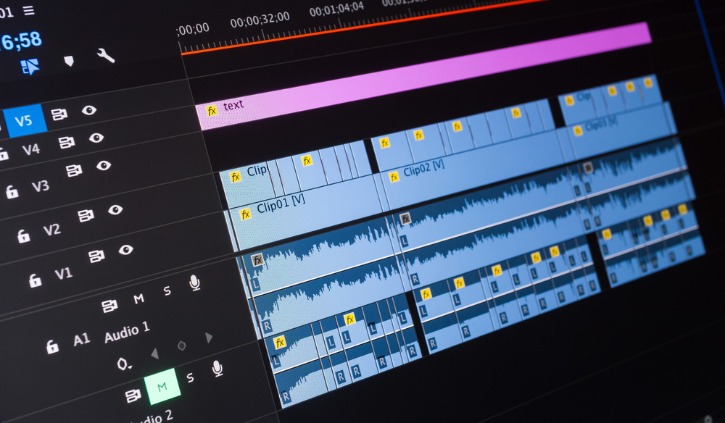
For content teams, the biggest wins arrive in post-production. An AI Background Music Generator can deliver loopable cues for intros, transitions, and outros that match brand tone across hundreds of videos. Need 20 variants of “calm, lo-fi study beats, vinyl crackle, 70 BPM” to avoid Content ID conflicts? Generate, audition, and sequence them into a cohesive playlist in a single session. Editable stems—drums, bass, harmony, melody—let editors duck or strip elements for dialogue clarity without losing groove. Cue points align with hit moments, and intelligent looping prevents clicks or phasing when tracks repeat under narration.
Licensing clarity is essential. Royalty-Free AI Music models offer predictable usage rights: pay once (or subscribe), then deploy across social, broadcast, and ads without complex back-end royalties. Effective platforms bundle documentation for brand safety audits, including source transparency, term scopes, and Content ID handling to minimize takedowns. Metadata tagging—mood, energy, key, tempo—streamlines asset management for teams working in Premiere Pro, Final Cut, or DaVinci Resolve. And because stems are synchronized by design, editors can export alternate mixes (no melody, underscore, percussion-only) to meet platform loudness standards.
Real-world examples underscore the efficiency gains. A YouTube educator scales weekly uploads by generating six ambient variants tailored to each lesson’s pacing, ensuring consistent sonic identity across a semester-long series. An indie game studio creates procedural soundtracks that evolve as players explore new biomes, with adaptive layers crossfading based on in-game events. A D2C brand tests 50 ad edits with micro-variations in tempo and tonal color, discovering that a warmer analog synth bass drives better watch-through rates in the 15-second format. Tools like AI Music Maker turn prompts into mix-ready stems, letting teams ship faster while retaining creative direction and compliance with platform rules.
Under the Hood: Models, Ethics, and Cross‑Modal Detection
Quality and trust ride on model architecture, training data, and transparent safeguards. On the audio side, diffusion and transformer backbones now rival human-produced mixes in clarity. But technical excellence must live alongside ethical rigor: datasets should reflect licensed, consented material; melody similarity checks should detect and block close matches to protected works; and watermarking or fingerprinting should label outputs for later provenance checks. Strong content filters catch explicit lyrics or unsafe prompts. As these systems power more workflows, governance—clear audit trails, versioning, and opt-out mechanisms—becomes as important as new features.
Cross-modal AI strengthens this trust layer. Our AI image detector uses advanced machine learning models to analyze every uploaded image and determine whether it’s AI generated or human created. Here’s how the detection process works from start to finish: images are normalized and stripped of non-essential metadata; a vision backbone (often a ViT or hybrid CNN–transformer) extracts multi-scale features, while frequency-domain analysers look for demosaicing inconsistencies, GAN fingerprints, and diffusion upscaler residues. Noise residuals and compression artifacts are modeled against priors learned from both synthetic and camera-native datasets. An ensemble of classifiers—calibrated via temperature scaling—produces a confidence score, with thresholds tuned to minimize false positives on edited but authentic photos.
Robustness matters in the wild. Post-processing like resizing, sharpening, or JPEG recompression can mask telltale cues, so detectors train on augmented pipelines that simulate platform transformations. When metadata exists (lens model, exposure data, color profile), it’s considered but never trusted blindly; adversarial actors often spoof EXIF. A human-in-the-loop review path handles borderline cases, combining visual forensics with contextual checks. The same philosophy benefits music generation: provenance tags can accompany audio files; fingerprint systems identify near-duplicates; and safety layers reject prompts likely to recreate famous melodies. Taken together, AI Music Creation, responsible licensing, and reliable detection form a circular ecosystem where creativity scales and integrity holds—even as innovation accelerates.



 Lotte Jansen