

For caregivers and healthcare professionals, the daily ritual of transferring a patient from a seated to a standing position can feel like a high-stakes balancing act. It demands physical strength, precise timing, and an unwavering commitment to safety. While manual techniques have long been the standard, they come with a hidden cost—chronic back injuries for caregivers and anxiety for patients who fear falling. Enter the power sit to stand lift, a revolutionary piece of equipment that transforms this precarious moment into a smooth, controlled, and dignified process. Unlike manual lifts that require the caregiver to pump a jack or crank a handle, a powered model uses an electric actuator to handle the heavy lifting. This not only spares the caregiver’s spine but also gives the patient a sense of active participation in their own mobility. The device works by positioning the patient on a padded platform, securing a vest or sling around their torso, and then gently guiding them upward into a standing position. The key difference lies in the power—a quiet, consistent motor that ensures the movement is never jerky or abrupt. For patients recovering from surgery, stroke, or age-related weakness, this smooth transition can be the difference between a successful rehabilitation session and a terrifying ordeal. The technology behind these lifts has evolved significantly, incorporating features like anti-slip footplates, adjustable knee supports, and intuitive remote controls. But the true magic happens when the lift is used not just as a transfer tool, but as a therapeutic instrument that encourages weight-bearing and muscle activation. In this article, we will explore the mechanics, the clinical benefits, and the real-world applications that make the power sit to stand lift an indispensable asset in modern care settings.
Why Muscle Activation Matters: The Clinical Rationale Behind Powered Standing Transfers
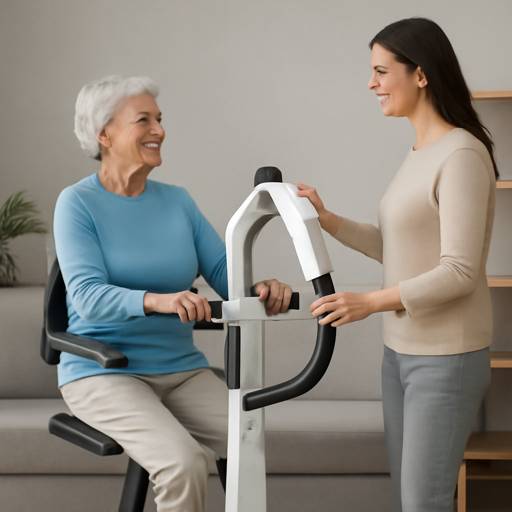
One of the most profound misconceptions about sit-to-stand lifts is that they simply “pick up” the patient. In reality, a properly used power sit to stand lift is a tool for active rehabilitation. The patient is not a passive load; they are encouraged to bear weight through their legs and engage their core muscles as the lift assists them upward. This distinction is critical in clinical settings where prolonged bed rest leads to muscle atrophy, reduced bone density, and decreased cardiovascular function. Physiotherapists often prescribe standing transfers as part of a progressive mobility plan, and a powered lift makes this possible for patients who lack the strength or balance to stand independently. The electric motor provides just enough assistance to overcome gravitational resistance, allowing the patient to contribute as much effort as they can safely manage. Over time, this repeated activation strengthens the quadriceps, glutes, and postural muscles, accelerating recovery from hip replacements, knee surgeries, or neurological conditions like Parkinson’s disease. Furthermore, the controlled ascent and descent of a powered lift reduce the risk of orthostatic hypotension—a sudden drop in blood pressure when standing—because the movement is gradual and predictable. Caregivers also benefit from the precision of a push-button control; they can pause mid-motion to adjust the patient’s foot placement or sling tension without breaking their own posture. A study published in the Journal of Rehabilitation Research found that using powered sit-to-stand lifts during early mobilization shortened hospital stays by an average of two days for post-surgical patients. The lift acts as a bridge—a transitional tool that restores confidence in both the patient and the caregiver. When the patient feels the stable support of the knee pads and the gentle upward pull of the sling, their fear of falling diminishes, and they are more willing to participate in standing exercises. This psychological component is just as vital as the physical one. The power sit to stand lift is not merely a mechanical aid; it is a catalyst for regaining independence, one lift at a time.
Reducing Caregiver Strain: How Powered Lifts Prevent Injury and Burnout
It is an uncomfortable truth that healthcare workers and family caregivers suffer alarmingly high rates of musculoskeletal injuries. The act of manually lifting a patient from a chair to a standing position places enormous stress on the lower back, shoulders, and wrists. According to the Bureau of Labor Statistics, nursing aides and orderlies experience overexertion injuries at a rate nearly three times higher than the average worker. The power sit to stand lift directly addresses this crisis by eliminating the need for manual lifting. With a powered model, the caregiver simply positions the patient, secures the sling, and presses a button. The motor does the work of hoisting the patient’s body weight, while the caregiver’s role shifts from a lifter to a guide. This not only preserves physical health but also reduces the emotional toll of repeatedly performing risky maneuvers. Caregivers report feeling less anxious and more confident when using a lift because they know they can handle patients of varying sizes without straining. Moreover, powered lifts allow a single caregiver to manage transfers that would otherwise require two or three people. This is especially valuable in home care settings where help may not be readily available. The ergonomic design of modern lifts—with adjustable base widths, padded knee supports, and easy-rolling casters—further minimizes the physical effort needed to maneuver the device into place. Some models even feature battery-powered drives that let the lift move itself across the floor, reducing the pushing and pulling that can also lead to injury. For agencies that employ traveling aides, providing a power sit to stand lift can significantly lower workers' compensation claims and improve staff retention. One case study from a Midwest rehabilitation center documented a 60% reduction in staff injuries within six months of introducing powered sit-to-stand lifts across all patient floors. The financial savings from fewer lost workdays and medical expenses more than offset the initial investment in equipment. Beyond the numbers, there is a qualitative shift: caregivers who feel safe are more present, more patient, and more effective. They can focus on the person in the lift rather than the physics of the lift itself. When the physical burden is lifted—quite literally—the caregiver can engage in meaningful interaction, offering encouragement and maintaining eye contact. This human connection is often lost in manual transfers, where everyone is bracing for the effort. The power sit to stand lift thus serves a dual purpose: protecting the body of the caregiver while preserving the dignity of the patient.
Real-World Applications and Case Studies: From Hospital Floors to Home Care
The versatility of the power sit to stand lift extends beyond hospital wards into skilled nursing facilities, assisted living communities, and private homes. Each setting presents unique challenges, and the powered lift adapts accordingly. In acute care hospitals, for example, patients are often connected to IV poles, oxygen concentrators, or cardiac monitors. A powered lift with a compact footprint and integrated sling management allows nurses to perform transfers without disconnecting essential equipment. One notable case study from a large urban hospital in Chicago involved a 78-year-old patient with bilateral knee arthritis and a recent hip fracture. Traditional manual transfers were excruciating for her and risked destabilizing the surgical site. The physical therapy team introduced a power sit to stand lift with a padded knee pad and a full-body vest. Within five days, the patient was able to stand with minimal assistance, and by day ten, she was using a walker for short distances. Her recovery was not just faster but also less painful, and she reported feeling “in control” for the first time since her surgery. Another compelling example comes from the long-term care sector, where residents with dementia often resist transfers due to confusion and fear. A powered lift’s slow, steady motion can be less startling than manual lifting, reducing agitation. Staff at a memory care unit in Oregon noted that resident compliance with daily standing programs increased by 40% after switching to powered lifts. The low noise level of the electric motor also contributed to a calmer environment. In home care, the challenges are different: limited space, uneven flooring, and the absence of professional backup. Here, the power sit to stand lift becomes a lifeline for family caregivers. One home health aide in rural Pennsylvania described how a powered lift allowed her to safely transfer her 200-pound husband from his recliner to his wheelchair multiple times a day without risking her own back. She initially resisted the idea, thinking the equipment would be cumbersome, but found that the lift’s portability and ease of use actually reduced her daily stress. She could now perform transfers in under two minutes, compared to five minutes of awkward manual maneuvering. For bariatric patients—those weighing over 300 pounds—the powered lift is often the only safe option. Specialized bariatric models can handle high weight capacities while maintaining stability through a wider base and reinforced frame. A bariatric rehabilitation program in Texas reported that using a power sit to stand lift reduced fall incidents during transfers by 85% over a one-year period. These real-world examples underscore a common theme: the lift is not a replacement for human care, but an amplifier of it. It enables care that is safer, gentler, and more respectful of the patient’s capabilities. To explore the full range of models and features, consider visiting a trusted resource like the power sit to stand lift selection, which offers options designed for various weight capacities and clinical needs. Each lift is engineered with the same core philosophy: to make the simple act of standing possible for those who need it most, while protecting everyone involved in the process. The evidence is clear—when technology meets compassion, outcomes improve across the board.


 Lotte Jansen