

For millions of individuals recovering from surgery, living with mobility limitations, or simply facing the natural challenges of aging, the simple act of standing up can become a monumental task. The bathroom, the living room chair, or the edge of the bed—once familiar places—can turn into sources of anxiety and risk. This is where the sit to stand lift for home use steps in, not merely as a piece of medical equipment, but as a veritable key to independence. Unlike traditional patient lifts that require full suspension, sit-to-stand devices are designed for individuals who possess some weight-bearing ability and upper body strength. They work by supporting the patient from a seated position, gently guiding them into a standing posture, and then safely lowering them back down. This process is not only safer for the patient—reducing the risk of falls and muscle atrophy—but it also dramatically lowers the physical strain on caregivers. Home caregivers, often family members with no professional training, are particularly vulnerable to back injuries when attempting manual transfers. A well-chosen sit-to-stand lift bridges this gap, offering ergonomic lifting mechanics that protect both parties. Moreover, these lifts promote an active recovery philosophy: instead of being passively moved, the patient engages their leg muscles and core, which aids in circulation, digestion, and overall rehabilitation. The integration of such a device into a home setting is about more than logistics; it is about restoring dignity, fostering confidence, and making the house a sanctuary of safety rather than a maze of obstacles.
Understanding the Mechanics: Why Sit-to-Stand Differs from Other Patient Lifts
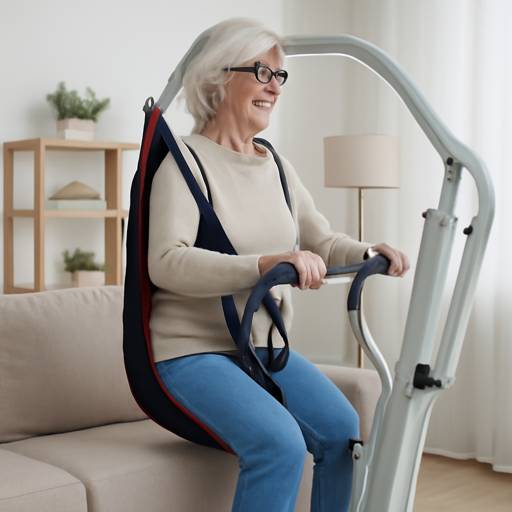
To truly appreciate the value of a sit to stand lift for home use, one must first understand the biomechanical distinction between a full-body sling lift and a stand-assist device. A typical Hoyer-style lift uses a sling that cradles the entire body, hoisting the patient completely off the seat or bed. While this is necessary for individuals with zero weight-bearing capability, it can feel passive, uncomfortable, and even frightening for someone who still has some mobility. A sit-to-stand lift, in contrast, operates on a different principle: the patient sits on a narrow saddle or padded sling that supports the buttocks and thighs, while a knee pad stabilizes the legs. The lift then tilts forward, bringing the patient into an upright, weight-bearing position. The key is in the partial weight bearing—the patient actively helps by pushing up with their legs and gripping the handles. This active participation is critical for maintaining muscle tone and joint flexibility. From a caregiver perspective, the mechanics are equally transformative. Traditional manual transfers often require the caregiver to bend, twist, and lift awkwardly, leading to chronic back strain. The sit-to-stand lift replaces that hazardous motion with a smooth, controlled hydraulic or electric mechanism. The caregiver simply positions the lift, secures the patient, and operates the lift via a remote or a hand crank. This eliminates the need for strenuous manual exertion, making it possible for a single caregiver—even one of smaller stature—to safely transfer a larger patient. Additionally, modern home-use models are designed with narrow bases and swivel casters, allowing them to navigate doorways, move over rugs, and tuck under beds. This maneuverability is a game-changer in the confined spaces typical of a home environment, where hospital-style corridors do not exist. The lift essentially becomes a third hand, one that never gets tired.
Everyday Applications: Beyond the Bedroom and Bathroom
While most people associate patient lifts with getting out of bed or off the toilet, the versatility of a sit to stand lift for home use extends into virtually every room of the house. Consider the dining room: many individuals with limited mobility find it difficult to get up from a dining chair after a meal, leading to isolation or skipped meals. A portable sit-to-stand lift can be wheeled right up to the table, allowing the user to transfer from chair to lift and then to standing for a safe walk to the living room. In the living room, the lift can assist with transitions from a low sofa or recliner—seats that are notoriously hard to rise from without strong leg muscles. The ability to use the lift in multiple locations reduces the need for multiple caregivers or multiple devices. Another often-overlooked application is the car transfer. While not all models are designed for vehicle entry, many home-use lifts with a narrow footprint can assist a patient to stand from a wheelchair, after which a caregiver can pivot them into a car seat. This reopens the world of social outings, doctor appointments, and family gatherings. In the context of toileting, the lift is invaluable: it allows the patient to be positioned directly over the toilet, maintain dignity, and avoid the risk of a fall on hard bathroom surfaces. The knee pad and footplate provide stability, while the handles offer a secure grip. Some advanced models even feature a built-in scale or a sliding mechanism for easier transfers. Real-world case studies show that families who integrate a sit-to-stand lift report a 70% reduction in caregiver-related injuries and a marked improvement in the patient’s emotional well-being, as they feel less like a burden. For example, a 78-year-old stroke survivor who previously needed two people to help her stand could, after using a sit-to-stand lift, stand with only one assistant and eventually walk short distances with a walker. The lift did not just assist in daily tasks; it functioned as a rehabilitation tool that encouraged incremental progress. These everyday applications solidify the sit-to-stand lift as a cornerstone of home care, transforming the residence into a space where mobility is supported rather than restricted.
Selecting the Right Model: Key Features and Real-World Considerations
Not all sit-to-stand lifts are created equal, and choosing the right one for home use requires careful evaluation of the patient’s specific condition and the home environment. The first factor to consider is weight capacity. Most home-use models support between 300 and 450 pounds, but heavier-duty options exist. It is critical to select a lift with a capacity that exceeds the patient’s weight by at least 20 pounds to ensure a safety margin. Next, consider the type of lift mechanism: manual hydraulic lifts are less expensive and require no batteries or electricity, making them reliable during power outages, but they demand more physical effort to pump. Electric lifts offer smoother, hands-free operation, ideal for caregivers with limited arm strength, but they rely on rechargeable batteries. Another crucial feature is the base opening width. Modern sit-to-stand lifts often have a “spreadable” base that can widen to straddle a wheelchair or narrow to fit through doorways. The knee pad should be padded and adjustable, as it bears a significant portion of the patient’s weight. Look for lifts with flip-down or removable armrests for easier side access. Additionally, the sling or saddle design matters: some patients prefer a full-seat sling for stability, while others do better with a simple saddle that allows more leg freedom. Always consider the flooring in the home; locks on the casters are essential for tile or hardwood, while larger wheels handle carpet better. A real-world example from a home care agency reported that a family initially purchased a low-cost model with small casters, but it became stuck on the transition strip between the bedroom and bathroom. They switched to a model with 5-inch double-locking casters, resolving the issue entirely. Finally, think about storage. Some lifts fold flat for storage under a bed or in a closet—a huge advantage in a small apartment. By carefully matching the device to the user’s sit to stand lift for home use scenario, families can avoid costly mistakes and ensure daily transfers remain safe and dignified. Consulting a physical therapist or a durable medical equipment specialist is highly recommended before making a purchase, as they can test the fit and demonstrate proper technique.
For those ready to explore specific models designed to meet these rigorous home-use criteria, consider reviewing a curated collection of devices that emphasize safety, durability, and ease of use. You can find a dedicated range of options tailored for home environments at this sit to stand lift for home use resource, which provides detailed specifications and patient-caregiver feedback.



 Lotte Jansen